H
ere is a simplified look at the technology behind the plates. Both
plates are imaged just like any other offset plate. After imaging, a
chemistry-free plate is put through a clean out unit where a gum, or
clean out solution, removes the unimaged coating from the plate before
it goes on press. A process free plate goes straight from the CTP device to the
press, where a physical interaction between the ink and the coating causes
the unimaged coating to be removed by the first few makeready sheets.
A new class of plates
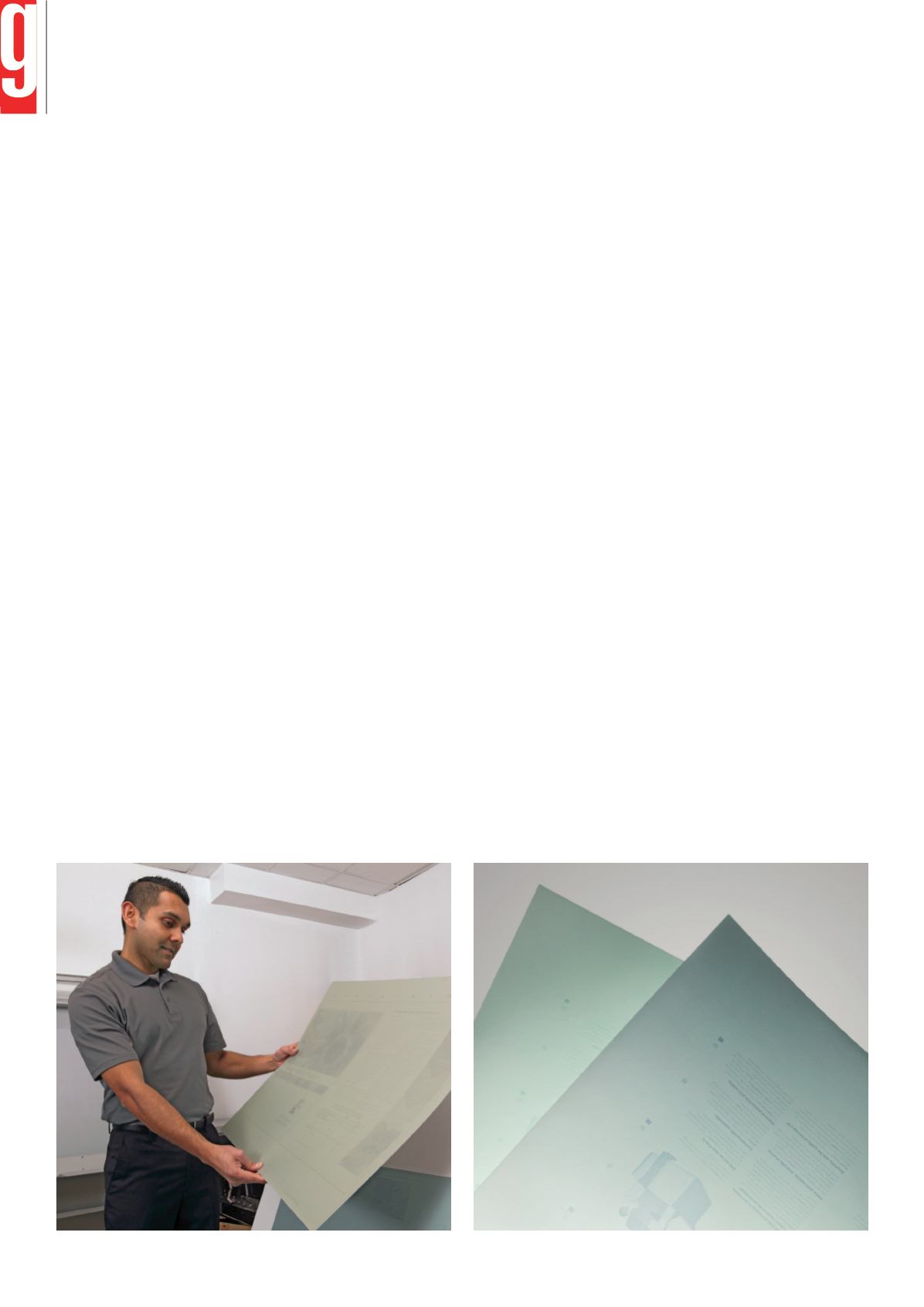
Kodak Sonora XP Process Free Plates are a new class of process-free plates. In
addition to being completely process-free, meaning that there is no processing
step, no chemistry, and no processing equipment, Sonora Plates deliver
capabilities similar to mainstream processed plates.
Komal Sharma, cluster director, Emerging Geographies, EAMER from Kodak
explained what makes Sonora XP Plates different, ‘While there are other true
process free plates, they have certain limitations, such as short run length
capabilities, slow imaging speeds and very weak latent image visibility after
exposure. Sonora XP Plates combine the benefits of process free with the
productivity and print capabilities of mainstream plates. In addition, they have
a stronger latent image than previous process-free plates, making it easier
for operators that need to put the plates on press.’
Environmental benefits
The environmental benefits of removing the processing step with process-free
plates are clear. Printers eliminate all processing chemistry and waste, they
reduce water and electricity usage, they eliminate the package waste associated
with processing chemistry, and there is no processing equipment to continually
clean, maintain, and ultimately dispose of.
As a comparison, a printer using chemistry-free plates must still use a clean out
solution and processing equipment. Replacing conventional developer with a
clean out solution is a step in the right direction for printers wanting to be green,
but process free plates such as Sonora XP Plates let them go even further.
Economic benefits
Savings with process-free plates include not just the tangible costs related to
cutting out chemistry and using less water and energy, but also all the costs
related to maintaining the processing equipment and disposing of chemistry.
In addition, one of the biggest potential savings comes from eliminating the
variability caused by processing, which can lead to poor quality, plate remakes,
additional waste on press, and more.
Sonora Process Free Plates eliminate the need for additional people to run and
maintain the processor. Plate making can virtually be handled by only one person,
thus eliminating the cost of additional manpower.
Chemistry-free plates, on the other hand, still need the additional step and
equipment to clean out the plate, along with the costs of the clean out solution,
equipment maintenance, electricity to run the equipment, manpower, and time
to press.
Process Free Plates Go Mainstream for Offset Packaging Printers and More
The fast imaging speeds, long run lengths, and strong print capabilities make
Sonora XP Plates suitable for a wide range of printers, both large and small,
using sheetfed or web presses. Offset packaging printers will be pleased to know
that Sonora XP Plates can be used for UV ink applications, are available in VLF
sizes and 0.40 mm gauge, and are also receiving customer praise for reproducing
colours more accurately and more vividly than other plates.
Sonora XP Plates offer fast imaging speeds with laser energy required of 150mJ/
cm2 on platesetters with Kodak Squarespot Imaging Technology, so printers can
take advantage of the maximum throughput capability of their platesetter in most
cases. Sonora XP Plates are capable of run lengths up to 200 000 impressions on
heatset and commercial coldest web presses, 100 000 impressions on sheetfed
presses, 50 000 impressions for non-UV offset packaging applications, and 10 000
impressions for UV-ink applications. The plates also offer high-quality 20-micron
FM screening capability on platesetters with Squarespot Technology and AM
screening of 1-99 percent at 200lpi.
These specifications are similar to those found with mainstream processed
plates, allowing printers to meet their customers’ needs while enjoying the
environmental and economic benefits of a process free plate.
The shift to process-free
Olivier Claude, Regional Business Director for Print and Vice President for
Commercial Business at Kodak EAMER, has a lot of confidence in the ability
of Sonora XP Plates to make a difference. He said, ‘With the ability to satisfy up
to two-thirds of the world’s offset printing requirements, including the needs of
sheetfed, heatset web, commercial coldset web, offset packaging, newspaper
and short-run UV printers, the Sonora XP Plate is the first plate that has the
potential to shift the industry to process-free platemaking.’
Making the shift to process-free is easy. Sonora XP Plates are qualified on all
of Kodak’s thermal CTP devices and many other popular thermal platesetters.
In most cases, a simple optimisation of the platesetter for Sonora XP Plates
is all that’s required to start using the plate.
64
I
The GAPP
magazine
www.
thegapp
.co.za
Vol 4 Issue 3 • A NEW CLASS OF OFFSET PLATES FOR PACKAGING PRINTERS


