Zetes helps Médecins Sans Frontières monitor Ebola patients
M
édecins sans Frontières (MSF) has launched
a project at its largest treatment centre, in
Monrovia (Liberia), to monitor patients in-
fected with the Ebola virus. Zetes participated in
this initial phase by providing a mobile application
that will track the location, condition, and treat-
ment of patients in a very difficult environment
using portable terminals. This system is now in its
pilot phase in Monrovia.
ELWA3, the Ebola facility set up by MSF in Mon-
rovia, is housed in a group of big tents. At present,
information concerning the condition of patients is
shared verbally or on sheets of paper scanned man-
ually inside the high-risk zone. MSF wanted a more
efficient, robust, and reliable system in which data
could be input, sent, and processed in real time,
whilst limiting the risks of error and of spreading
the virus by nosocomial transmission.
On arrival at the centre, each patient receives a
bracelet with a printed bar code and unique identi-
fication number. The MSF doctors scan the patient
identifier, which then allows them to look up the
patient’s records and input their diagnosis directly
using a questionnaire displayed on the screen of a
mobile terminal. The information is sent to the cen-
tre’s database via wireless network. The results of
the examination will determine the treatment to be
administered by the team of nurses and hygienists,
and adds to the epidemiological database. Thanks
to the solution supplied by Zetes, medical person-
nel can now look up the location, condition, and
progress of every patient at any time.
MSF personnel work under extremely harsh
and demanding conditions, with temperatures
approaching 40°C and humidity levels above 90
percent. In addition, the doctors must wear heavy,
bulky PPE (Personal Protective Equipment) suits.
This limits the amount of time they can spend with
patients. That is why there is no time to waste when
it comes to sending data. The mobile terminals sup-
plied are resistant to heat, humidity, and dust. They
are also designed to withstand contact with liquids,
which is essential because all equipment used dur-
ing patient exams must be cleaned with a chlorine
solution. Zetes aimed to take all of these require-
ments into account whilst providing the simplest
and most appropriate solution possible.
Robin Vincent-Smith, Project Manager for ‘ELE-
OS’ (Ebola Link Emergency Operational Support) at
MSF, said, ‘The solution put forward by Zetes pro-
vides the best response to the factors imposed by
our working conditions and the overall context. The
seriousness and scale of the problem mean that
we can’t afford to waste any time on research and
development to find a new solution. We need a sys-
tem that is ready to deploy, robust, and easy to use.’
Alain Wirtz, CEO of Zetes commented, ‘Zetes
has the benefit of several decades of experience in
the hospital sector, and has carried out projects in
African countries where conditions were extremely
challenging. We are delighted to be able to use this
expertise to support Médecins Sans Frontières. We
sincerely hope our contribution will be very helpful
to them.’
New Enfocus PitStop 13
E
nfocus has re-engineered the functionality
within PitStop 13 to increase the opportunities
to preflight and correct PDF files, with a major
focus on a solution for the very common issue of ‘no
or insufficient bleed’.
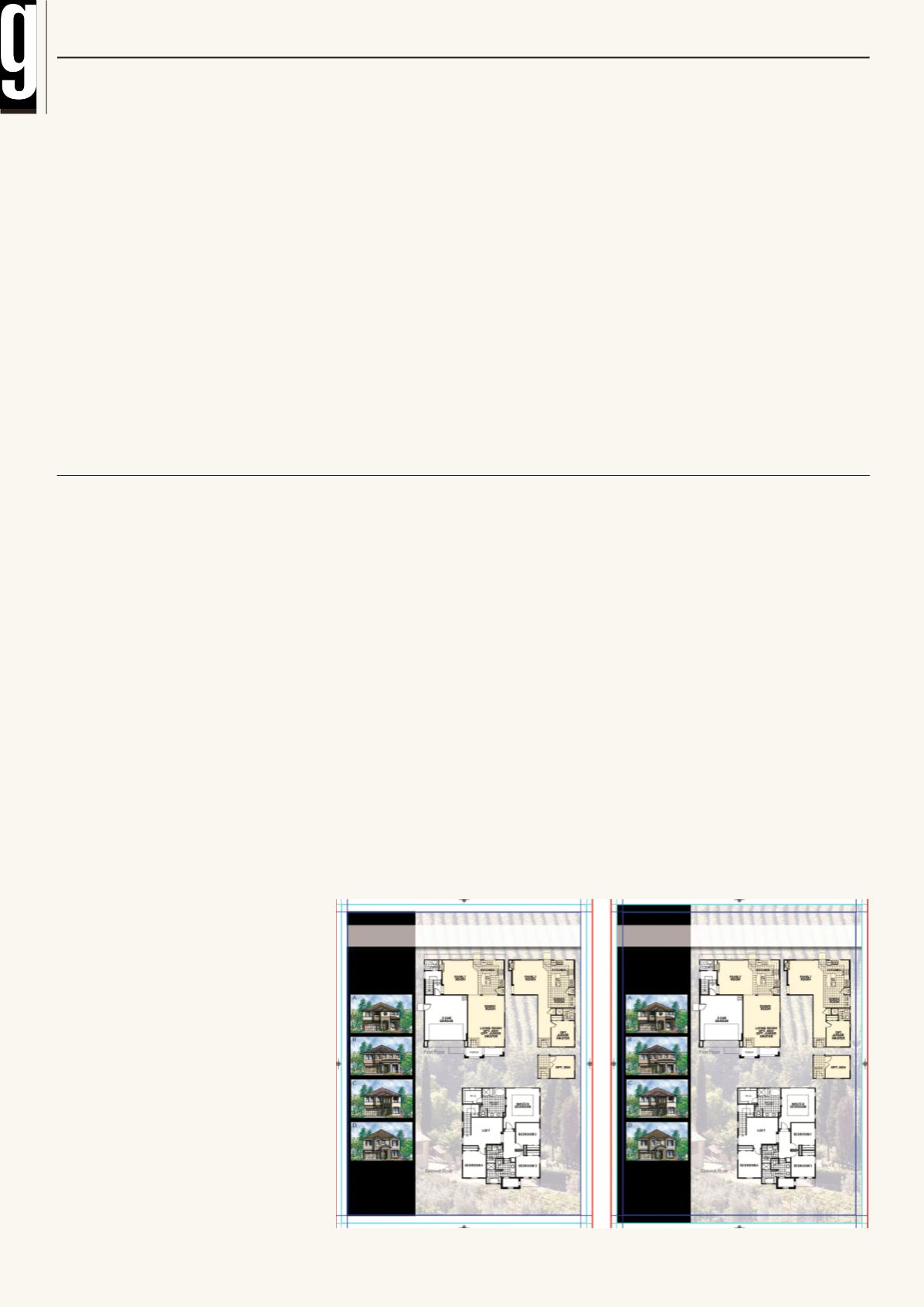
PitStop 13 has a re-designed Preflight engine
that addresses the challenges of creating high-
quality PDFs and is structured to ensure the submis-
sion of high-quality PDFs. It includes a new option
to generate bleed where none currently exists and
the ability for users to customise the language and
content of the error messaging within Preflight re-
ports, including the use of languages for which the
software has not yet been localised.
Andrew Bailes-Collins, senior product dan-
ager responsible for the PitStop product family, ex-
plained, ‘As PDF files are now being used for more
and more complex print jobs and deadlines are
becoming increasingly tighter, it became obvious to
the PitStop development team that the current Pre-
flight engine needed some improvements in order
to support the current and future needs of our users.
The result is the next generation of PDF Preflight
and correction. In addition to paying close attention
to customer feedback, we unleashed the creativity
of our engineering team to ensure that PitStop 13,
which contains both enhancements and brand new
functionality, stays ahead of market demands and
secures our continuing leadership position in the
preflight and auto-correction arena.’
Preflight Restrictions represents the most sig-
nificant change to the PitStop Preflight library since
it was created 15 years ago. It allows the checks
and fixes included in a preflight profile to be lim-
ited to certain aspects of a PDF. For example, a PDF
page box, a certain page or pages, a particular area
or specific elements of a PDF, even different layers
within a PDF file can each be checked in different
ways, depending upon user requirements. The op-
tions for customising Preflight are now virtually
endless.
This means that PitStop 13 users benefit from
a much more targeted Preflight check, receiving
fewer irrelevant warnings and errors. It also ena-
bles the ability to carry out complex quality control
routines, thoroughly checking files in one process-
ing pass.
Due to the fact that the PitStop Preflight editor
interface, already familiar to hundreds of thou-
sands of users around the globe, has only minimal
changes, the new functionality can be implemented
without any major retraining or re-reading of prod-
uct manuals. This is a significant benefit for users.
Another major enhancement is the Add Bleed
Action, which allows bleed to be generated even if
none exists in the original file.
Bailes-Collins explained, ‘Lack of bleed in sup-
plied PDF files is still a major issue for our custom-
ers. Previous versions of PitStop displayed bleed
if it was available and could automatically extend
rectangular shapes to create bleed if none existed.
Users could also manually manipulate a PDF to
extend bleed if the file design allowed it. The new
version is a leap forward, as it works by mirroring
the individual objects that are close to or cross a
PDF box to create bleed. These mirrored objects are
also completely editable so the resulting bleed can
also be adjusted manually if necessary, which we
believe is unique in the world of preflighting. Bleed
can be generated for single or multiple objects, as
well as complete pages or documents, significantly
streamlining workflow in the production process.’
Based upon PitStop users’ request, the ability
to customise the warning and error messages in
the PitStop Preflight reports has been added as an
important new. In PitStop 13, messages can be cus-
tomised to reflect non-technical language that can
include suggestions for corrections if necessary. In
addition, the preflight messages can be translated
into languages that are not currently supported by
the PitStop application.
Subscription licensing models are becoming
popular within the design, print and publishing in-
dustries. Enfocus has had positive feedback from
more than 2000 customers regarding this type of
licensing model, and as a result Enfocus is pleased
to announce that subscription licensing is now a
new option users can consider when purchasing
PitStop Pro 13.
Users purchasing or upgrading to PitStop 12
from the 2nd of February 2015 will automatically be
entitled to PitStop 13 free-of-charge when the new
version is available.
Vol 5 Issue 1 • THE GAPP TIMES
92
I
The GAPP
magazine
www.
thegapp
.co.za


